
◀︎ Between lucidity and hope ▶︎
As we step into 2026, it would be tempting to retreat into polite, conventional, reassuring wishes. That would certainly be more comfortable.
But it would not be honest, because the world is not doing well.
It is neither calm nor stable. It is fragmented, tense, crossed by deep fault lines — geopolitical, technological, social, climatic, but also ideological and religious. Yesterday’s certainties have faded away, and the promise of linear progress has given way to a diffuse sense of unease, sometimes even genuine moral fatigue.
We live in an age where complexity is no longer the exception but the norm, where speed often prevails over meaning, and where authoritarian temptation advances as fear and populism take hold. Everywhere, a regressive nationalism — often racist, always simplistic, sometimes violent — is gaining ground, to the great benefit of autocrats and dictators of all kinds.
And yet.
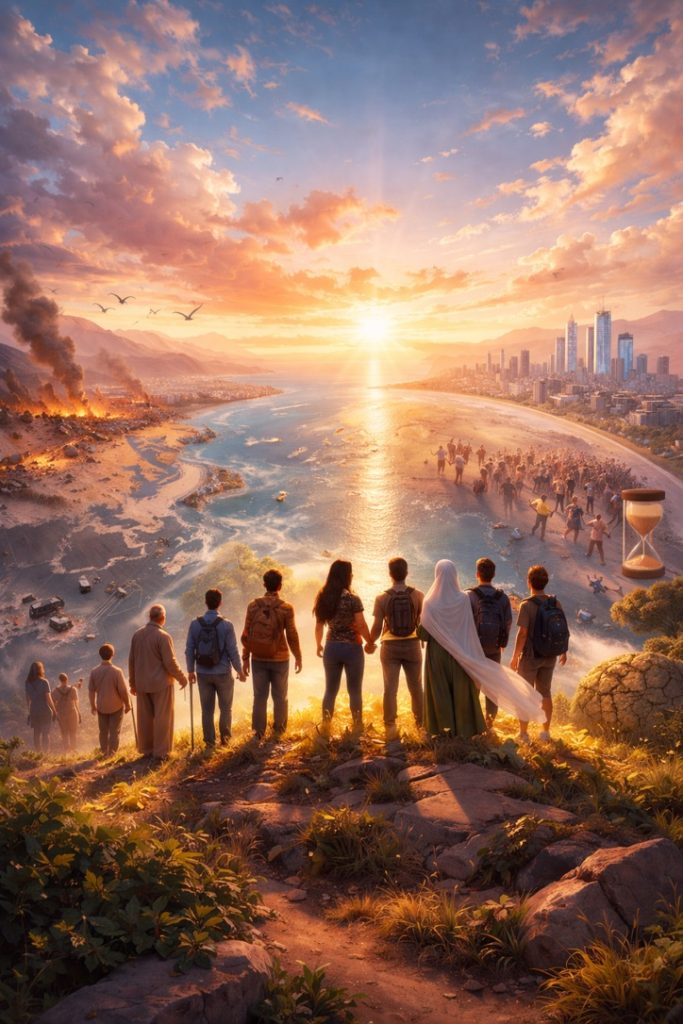
For those willing to look reality straight in the eye — without naïveté, but without resignation — there remain powerful reasons for hope. History is never written in advance. It bends, often where we least expect it. Sometimes it recovers from below, through discreet commitments, silent forms of resistance, and minds that refuse to surrender to the comfort of cynicism.
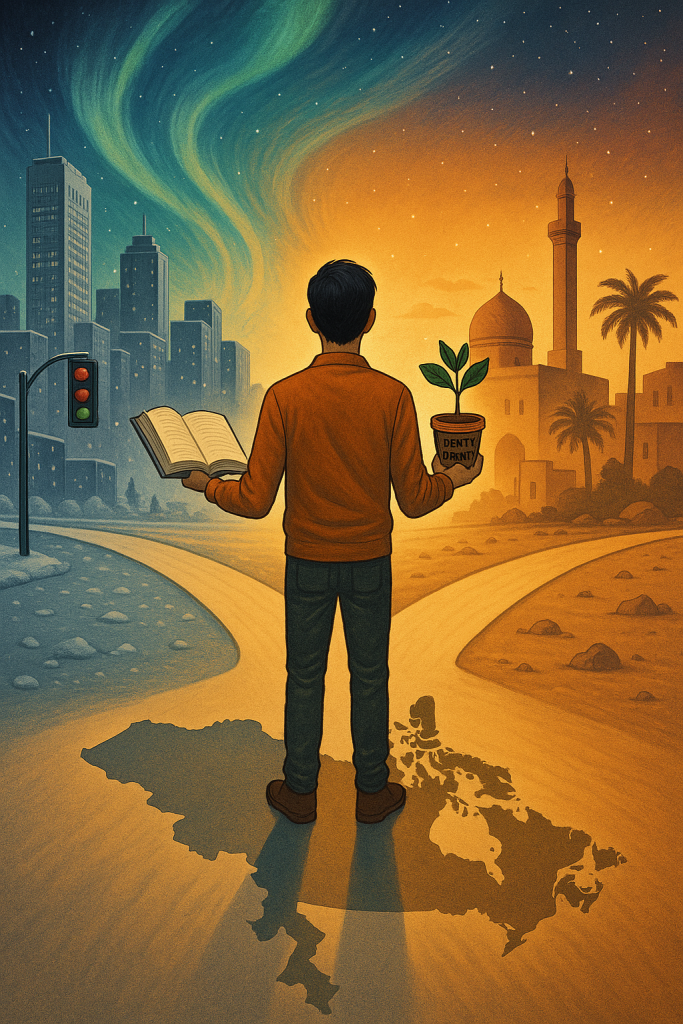
Algeria, too, stands at such a crossroads.
There are reasons to hope. Real ones. They lie in a young, educated, globally connected generation; in a diaspora rich in experience; in considerable human and natural resources. They also lie in the country’s geography — vast, strategic, open to the Mediterranean, the Maghreb and Africa — in a dense history, sometimes painful but foundational, and in a deep, diverse, creative culture that has never ceased to produce meaning, art and thought.
Despite everything, women and men continue to build, create, reflect and transmit. Often against the current. Sometimes at personal risk. But with a consistency that commands respect.
The concerns are just as real. Concern over political confinement, the erosion of freedoms, regulatory instability, and the persistent mistrust between the State and its vital forces. Concern over short-termism, defensive reflexes, and the temptation to manage complexity through control rather than trust. Concern, finally, about the risk of a silent drift: no spectacular collapse, no genuine take-off — just a slow loss of momentum.
To say this is not pessimism. It is a refusal of blindness.
To this national equation are added regional and international horizons that remain largely underexploited. The relationship between Algeria and the European Union — marked by obvious interdependencies but persistent misunderstandings — could become a mature space for strategic cooperation, provided that posturing is abandoned on both sides. The Maghreb, long invoked, still struggles to take shape, even though it remains a geographical, economic and human obviousness. As for Africa, it represents a natural, historical and cultural horizon, still largely underinvested, yet rich in promise if approached with a long-term vision.
None of this is simple. Nothing is guaranteed. But nothing is closed.
For 2026, I will therefore refrain from a list of incantatory wishes. I will instead formulate one central wish: that of shared lucidity. Because lucidity makes intellectual courage possible, allows nuance, and enables the rebuilding of trust. It keeps debate alive, nourishes fertile doubt, and ensures transmission. Above all, it prevents societies from lying to themselves for too long.
2026 will probably not be an easy year.
But it can be a useful one.
A year of clarification.
A year in which we choose, individually and collectively, not to give in to fear, nor to the comfort of indifference.
That, in any case, is the wish I form for you, for us, and for this country to which we are bound — whether we like it or not — by history, by emotion, and by responsibility.
Wishing you all a very meaningful 2026.
Lucid. Demanding. And, despite everything, deeply human.